"That's all?"
Why AI would never be enough for Miranda Priestly

"That's all?"
Why AI would never be enough for Miranda Priestly

In a world of artificial overload, the tangible becomes the ultimate moment of truth. The release of The Devil Wears Prada 2 shows that when everything is available in unlimited quantities, it loses its value. Timo Schönauer explains why physical brand experiences are now the most important channel for communicating brand values.
"That’s all?" Why AI would never be enough for Miranda Priestly
Do you remember the scene where Miranda Priestly deconstructs the “cerulean blue” sweater? It was a lesson in the hard, physical causality of the fashion industry. Every fiber was the result of real decisions – from the runway to the bargain bin. This scene symbolized the tangible truth in the fashion business.
Today, as The Devil Wears Prada 2 is released, we are faced with a new reality: the line between what is real and what has been synthetically created is becoming blurred. When we see an azure-blue dress today in a perfectly rendered trailer or on a virtual influencer’s feed – does it even exist? Or is it merely the pixel pattern of an AI?
The currency of the future: Trust is the New Luxury
In an environment of digital hyperinflation, trust is becoming the scarcest commodity. Studies show that over 60% of consumers today can no longer reliably distinguish between authentic and artificial content. The result is a creeping devaluation of digital brand promises.
In this vacuum, physical presence becomes the ‘truth interface’. Only in physical space can customers actually verify a product’s quality, feel and aura. For brands, this means an uncomfortable truth: reality requires investment. Whilst AI-generated assets are cost-effectively fed into feeds, a physical brand experience demands the courage to make a selection. Yet it is precisely this exclusivity that makes it so compelling today. It is no longer about maximum reach, but about gaining maximum trust within the relevant target group.
Three strategies, one goal: the ‘reality check’ at the point of culture
In the run-up to the launch of The Devil Wears Prada 2, we are currently seeing how global brands are using this cultural moment to physically deliver on their promises:
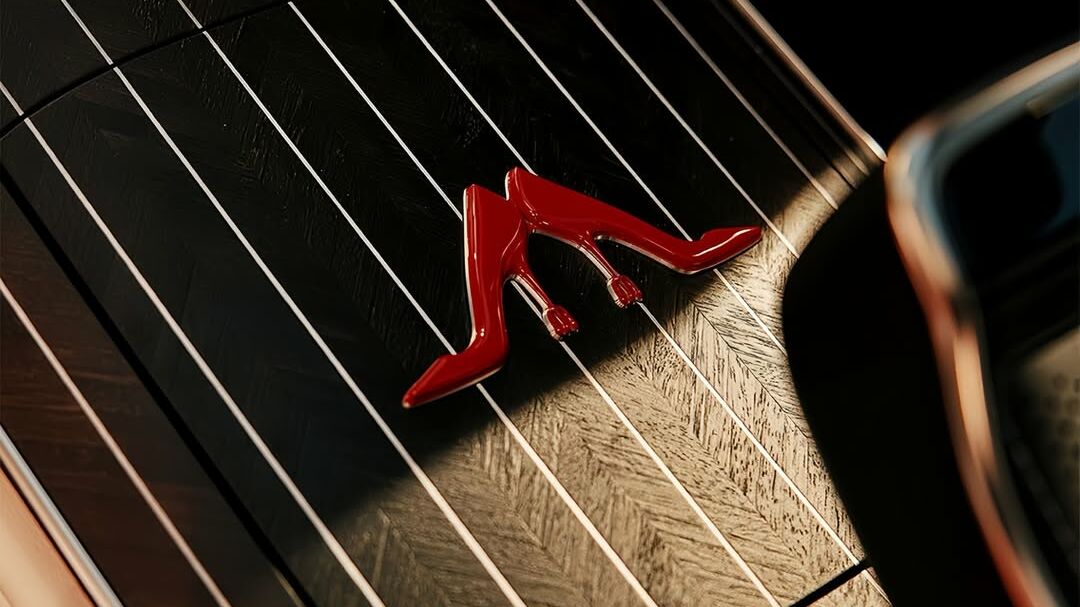
Maybach: The hard currency of exclusivity Maybach – Miranda Priestly’s car of choice in the second instalment as well – is focusing on the ‘The Art of Arrival’ campaign. Instead of relying solely on CGI, the brand is showcasing the physical presence of a one-of-a-kind S-Class at the premiere celebrations. Here, the target audience can examine the product in real life. The promise of exclusivity and bespoke craftsmanship thus becomes tangible – the press photos emerge as ‘free’ marketing material, arising quite organically from reality.
Grey Goose: The Taste of Community The Grey Goose vodka brand is targeting a different audience and is making a splash in New York with immersive pop-ups for its cult drink, ‘Devil’s Roast’. Here, the digital film’s promise is literally brought to life on the tongue. The New York vibe is served up as a community experience on top. This isn’t a marketing gimmick, but the use of a cultural moment to reach customers in real life.
Diet Coke: The immersive experience Coca-Cola isn’t just using clever visual product placement and a limited special edition of extra-slim cans for the film’s launch. The American corporation is going one step further and becoming an essential part of the experience – though so far only in American AMC cinemas. From the film’s cinema premiere, three exclusive flavours will be available in cinemas that are not otherwise on sale. The hype surrounding the film also becomes hype for the Cola products, which promise to be just as unique. The cinema visit itself thus becomes a physical experience, with Cola becoming an integral part of the memory of the cultural phenomenon surrounding The Devil Wears Prada. The competition not only turns every participant into a potential “Andy” conquering New York, but also gives away hundreds of co-branded merchandise items during the campaign period. Cola is not just one sponsor among many, but becomes a tangible part of the experience.
The Inconvenient Truth
These examples show that we must stop viewing physical space merely as an ‘experience playground’. It is, and remains, the fundamental tool for safeguarding brand value. The flood of AI campaigns is often too perfect – our brains recognise the absence of human imperfection and react with mistrust.
Digital scaling is the antithesis of trust. An AI filter is infinitely available and thus limited in its added value. True trust is born of the proof of effort, time and physical presence. Brand experiences today are about risk management. It is no longer a question of ‘How many people do we reach?’, but rather ‘How many people still believe us?’
Miranda Priestly would never settle for just a digital rendering. Neither would her clients. If the feed is where interest begins, then reality is where trust is earned. In a world of artificial excess, physical truth is the ultimate luxury.
Originally published in HORIZONT.
Any questions? Email us